

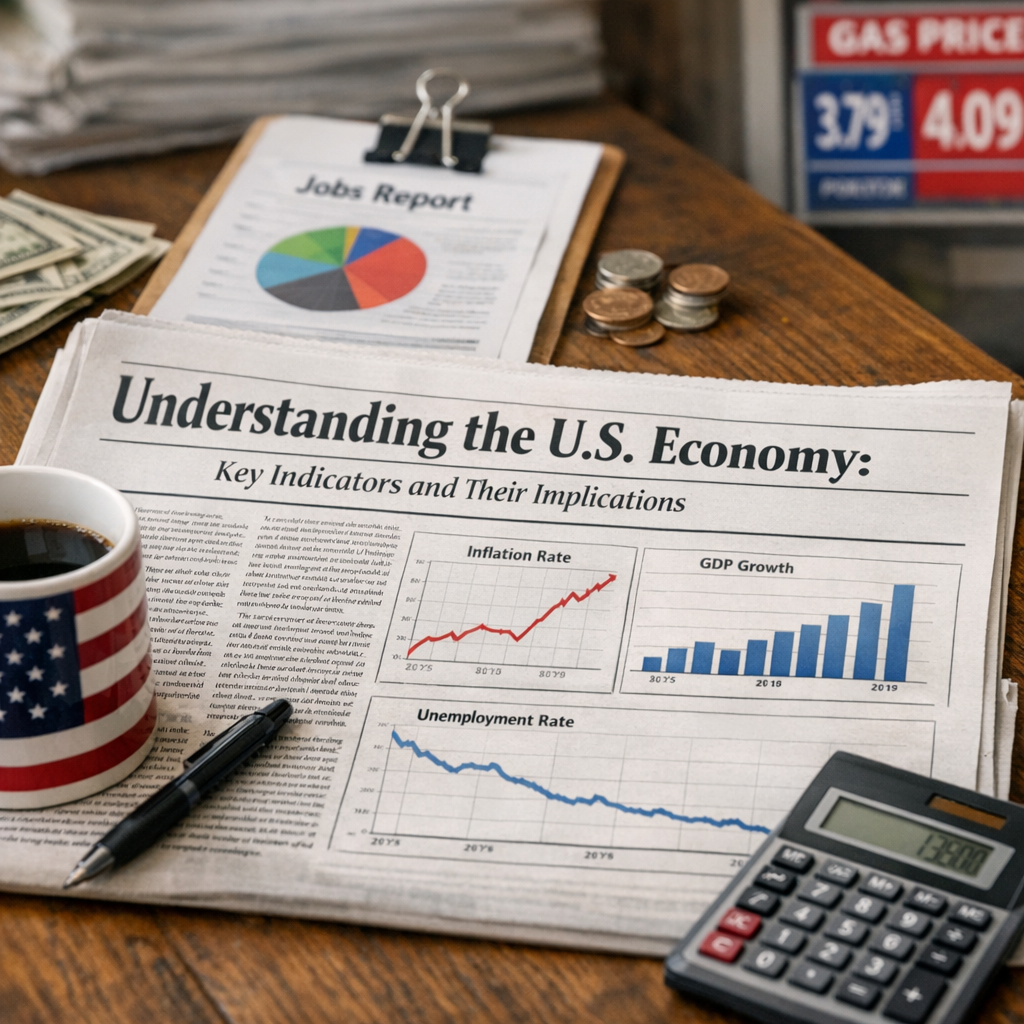
The U.S. economy is a complex and dynamic system, influenced by various factors including policy decisions, global events, and technological advancements. Understanding its current state requires examining key indicators such as Gross Domestic Product (GDP) growth, inflation rates, and employment trends.
Gross Domestic Product (GDP) Growth
GDP measures the total value of goods and services produced over a specific period and is a primary indicator of economic health. In the first quarter of 2026, the U.S. economy expanded at a 2% annualized pace, driven in part by advancements in artificial intelligence and a rebound from previous government shutdown effects.
Inflation Rates
Inflation reflects the rate at which the general level of prices for goods and services is rising. As of April 2026, inflation reached its highest level in two years, influenced by factors such as international conflicts affecting oil prices.
Employment Trends
Employment levels are crucial for assessing economic stability. While specific job growth figures for 2026 are not detailed in the available sources, it’s important to monitor unemployment rates and job creation statistics to gauge the labor market’s health.
Implications for Durham, North Carolina
For residents of Durham, these national economic trends have local implications. A growing national economy can lead to increased business opportunities and job creation within the community. However, rising inflation may affect the cost of living, impacting household budgets. Staying informed about these indicators can help individuals and businesses in Durham make better financial decisions.
Understanding these economic indicators provides valuable insights into the nation’s financial health and helps communities like Durham navigate the complexities of the broader economic landscape.